Internet of Buttholes

I wasn’t allowed to say the word butthole growing up.

Butthole

Butthole

Butthole

Slinging that word at a sibling was considered a no-no and led, at least for awhile, to getting my mouth washed out with soap.

The Internet is full of buttholes. Those people we normally wouldn’t allow within 5 feet of us who are now snuggled up to our screens. Writing comments on our blogs and saying things on our social media pages that they would never say to our faces… or maybe they would say those things?

Photo by Marc Schäfer on Unsplash

I’m tired of the buttholes ruining the Internet. I’m tired of:

  • The Josh Groban fan who got mad at my not liking Josh Groban’s CHARACTER in his latest show.
  • That person who doesn’t like me blogging and yet calls me a friend.
  • Those on twitter who have made it a hellish cesspool of negativity versus allowing it to be the amazing news tool it originally was.
  • Those on Facebook who think that it’s the best place ever to hash out politics and deep theological debates. (Add twitter to this comment too.)

Today I declare war on the buttholes. Go away! Your words are like poison to the soul. 

My shields are up. I’m not going to let some random internet person ruin my day NOR be the cause of me getting my mouth washed out with soap for calling them…

A butthole.

(Not that that would happen. I’m an adult now. I can say adult things. I think.)

From Across the Net – “Vancouver Canucks Ban Video Games While On The Road”

This made me smile. There is something humorous about a big boy hockey team being told video games are a no-no.

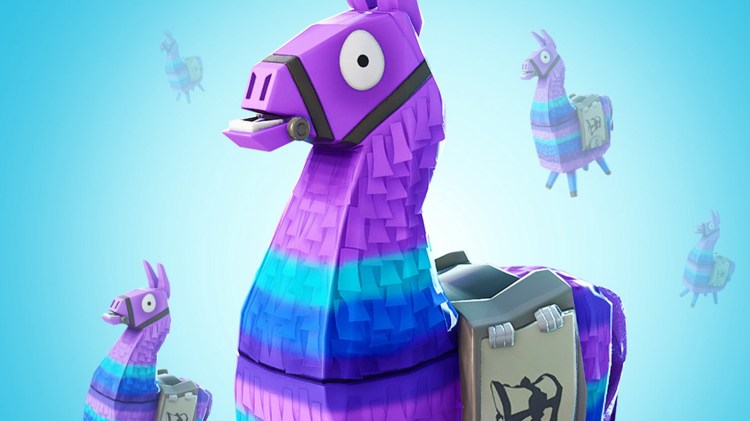
As reported by The Province, Canucks’ center and alternate captain Bo Horvat explains that video games are presenting a distraction from players interacting with each other, as they’re just playing a lot of Fortnite instead.

“Yeah, that’s definitely a no-go on the road,” Horvat said. “No more Fortnite. No more bringing video games on the road. It’s strictly team meals, team dinners and hanging out with the guys. So we put an end to that.”

You can read more here

From Across the Net – “School-Year Screen-Time Rules from a Teacher”

I enjoyed this piece, “School-Year Screen-Time Rules from a Teacher“, by Rebecca Young over at Common Sense Media.

Last year Fortnite invaded my middle school classroom — as I believe it did to middle school classrooms across the country. Students who were usually on task and high-performing were nodding off and “forgetting” to do their homework. The morning conversations about how late they stayed up or who was the last man standing became part of our early morning check-ins. Then the phone calls with parents started: Over several months, I had numerous telephone and after-school meetings with parents concerned about their kids’ performance. When I brought up screen time, there were a range of reactions. Some parents seemed oblivious as to what their children were doing after hours, some didn’t know how to rein in screen time, and some thought they had it all under control — but clearly did not.

You can read more here.

From Across the Net – “Should You Play Violent Video Games?”

The recent extended stay of Fortnite, in my house, has me questioning video game violence once more. Specifically the language we use when playing violent games. The so-called Power Rangers Effect where kids start to do ninja moves after watching the show. But instead of ninja moves, using game specific weapons when talking/playing: “I’m going to kill you with my SMG.” Dr. Schut does a great job diving into the topic of video game violence.

I wish I could give you a simple formula: do this and don’t do that. But life doesn’t usually work out so neatly. I think the lines vary from person to person, from situation to situation, from mood to mood.

You can read more of Dr. Schut’s article titled “Should You Play Violent Video Games?” over at Love Thy Nerd.

Video Games and Attitude

We have a rule in Hall household that goes something like this:

When you start to get angry or frustrated at a video game, you need to turn it off and take a break.

This rule applies to myself and to my son. Years of playing video games has taught me that taking a break, when angry or frustrated, is beneficial. Even when you are so frustrated that all you want to do is keep pushing through, I’ve found that it is best to stop. There is something taking a break does to the brain. As a kid, I remember pausing a game overnight and then being able to destroy a boss, that was previously impossible, the next day.

But what about when a game causes attitude? Anger that one can’t play longer or even has to quit? I remember a period when I was playing Mass Effect 2 a few years ago. I’d play the game late into the night, ignoring my bride, who would end up giving up and going to bed. I felt a pull while playing that game, a drive to see where the story went. Mass Effect 2 had it’s hooks in me just as World of Warcraft did years before.

I know that I can have issues with some games. Even though I haven’t been hooked on a game in awhile, I know that the right combination of design elements can take me down.

The same is true with my son. The Legend of Zelda: Breath of the Wild pushed all the right buttons for him. It was all that he and the kids at church were talking about. I’d constantly hear about the Divine Powers:

  • Revali’s Gale
  • Daruk’s Protection
  • Mipha’s Grace
  • Urbosa’s Fury

I’d hear so much about Breath of the Wild that I thought I was going to go nuts. And the attitude that came with the game, whenever he had to quit, was frustrating.

Tabitha and I find ourselves at the same attitude point again with Fortnite. But this time it’s a little different due to gaming elements Fortnite embraces (your child is being manipulated):

  1. The Store with Artificial Demand – When you log into the game, you can easily tab over to the Fortnite store. Here you can look/obsess/covet the latest in Fortnite cosmetics. Some of these cosmetics are available for a limited time, playing into an artificial demand where kids think they have to purchase something before it is gone.
  2. The Subscription with a Shady Pay-to-Win-with-Time Formula – Once you buy the $10 Battle Pass, Fortnite is all about unlocking tiers, which then unlock different cosmetics/skins/cool looking things. Fortnite developers Epic Games boasts on their website that the Battle Pass equals: 100 tiers, 100 rewards. One marketing bullet point states that it takes 75-150 hours worth of gameplay to unlock everything in the Battle Pass. Fortnite encourages players to dump as much time as they can into the game through their shady tier/unlock scheme. A pay-to-win-with-time formula, aimed at children.
  3. The Feedback Loop – A typical match takes 20 minutes to play. Unless you are knocked out of the match, in which case you can just jump into another match… and another match… and another match. This creates a feel good feedback loop for your brain. Just one more match, mom.

What is a parent to do? Here are a few things I’ve learned:

  • On the Nintendo Switch, you can set a screen time timer to help manage your child’s play. There are several options to choose from when the timer runs out, including shutting down the console (if you are feeling evil; Do not provoke your children… – Ephesians 6:4). Each console has different parental settings, read up on them, empower yourself.
  • Parent. Talk to your child about their attitude. Be ready to follow through with consequences (don’t offer empty threats). Also don’t be afraid to have your child take a day off a game.

Gaming attitude is something our parents did not have to deal with as much as we have to–although I say that while clearly remembering my Mom taking away the NES controllers–. So set some boundaries/consequences and read up/educate yourself on the tools you have at your disposal. Learn about the game your child is playing, the one you are growing to hate because of their attitude. You never know, you might learn something about your child and be able to help them set healthy boundaries to use later on in their adult lives.

You are the parent. You do not deal nor negotiate with emotional terrorism.

Gaming is a privilege, not a right. (I can’t believe I just wrote that as a dad who games.)

How are you working through your child’s attitude when it comes to games?

Design a site like this with WordPress.com
Get started