Our Actions Impact Others

Our actions impact others. Period. 

Recently I was reading about a guy named Jonah. Jonah was told to go to a city that was known to support terrorism. Being that the city of Nineveh’s reputation that wasn’t all that positive, Jonah decided not to go. In the process of running from his mission, Jonah ends up putting the men on the boat he escapes on, and all their cargo, in jeopardy. Jonah’s selfish actions not only almost cost the sailor’s livelihoods but their very lives as well. All of this could had been avoided had Jonah been obedient to God telling him to go to Nineveh and speak His word to the people.

Our actions carry life and death consequences. Period.

When Achan heard the news that that the battle hadn’t gone well, he must have known deep within his soul that it was his fault. 36 people had died. The battle of Ai was supposed to have been easy. Something was wrong and Israel’s leader, Joshua, knew it. After some heavy sifting of thousands of people, Achan stood at the forefront. He confessed that he had been disobedient and had gone against what God had said about taking things from Jericho. Achan had disobeyed and had stolen from what was to be devoted to God. Because of his actions, Achan, his family and all of his possessions were destroyed by rock and flame.

Bible stories are easy to gloss over, especially after you have heard the same stories repeatedly. I personally find that it is easy to miss the bigger narrative that God is writing. In the above two examples of Jonah and Achan, both men did not take into consideration the consequences of their actions on others. In Jonah’s case, the men and their cargo could have perished in the storm; In Achan’s case, Achan and his family suffered due to his disobedience. Both stories have gotten me thinking about the ramifications of my own actions. How will my daily actions impact my:

  • Family
  • Friends
  • Workplace, etc.

I want to encourage you today to look at the bigger picture.

How have your actions impacted those around you?

Video Game Addiction: Level 2

Jordan Ekeroth, over at Follow & Engage, has been writing a series on video game addiction lately. In his second post, “Engage: Game Addiction Part 2”, Jordan says that gaming can be “compulsive”. I couldn’t agree more.

I have witnessed the devastation of video gaming taken to the level of obsession. Which is to say the hobby taken to levels where a gamer’s health, relationships, and job become affected. In college, I remember guys on my dorm floor staying up until all hours of the night playing the latest game. For some this was perfectly normal behavior as they used video games as a means to blow off stress in between homework sessions; For others, video games were the only thing they lived and breathed. As the sun rose and fell, they played with little regards for personal hygiene or school work in general. Those that fed this obsessive behavior either wizened up after a devastating semester of failing grades or dropped out.

College, in particular, is an interesting time of learning all about personal responsibility and life in general. I remember what I consider to be a “lost summer”. I had driven home to California from my college in East Texas. I had left my girlfriend, my friends, and the sheltered life that college brings–sheltered from reality that is–. In an effort to have fun and just chill out, I ended up playing World of Warcraft that entire summer. Day and night, night and day, I sat at my parent’s kitchen table and leveled my character. Working hard to out level my friends who worked during the day. I feel stupid talking about this now, as that time seems like time completely wasted, but it is what it is. I was obsessed over the game.

My personal relationships began to suffer during this time. I drove my parents nuts, almost lost my girlfriend, and did nothing to grow myself physically/ spiritually. What I do know from my experience is that:

  • I will never again let a game control me like that, ever.
  • Video games, as with any other media medium, can quickly become an easy way to disengage and escape from reality. For me during this time, I was escaping getting a job for 3 months and trying to ignore the nagging of my Mom to get a job (she was right!).

What about you? Are video games more than just a hobby?

Reblogged: The Attributes of God

Tim Challies has been running a great series entitled “Visual Theology”. His second infographic in the series, The Attributes of God, is a fantastic reminder of who God is. I’m hoping to use this in teaching Bible study on Wednesday nights. Thanks Tim!

Repost: Order

Order

Note: I wrote this back in 2009. Ever since my summer of being anchored to the kitchen table playing World of Warcraft, the fine line between hobby and addiction has been on my mind. Enjoy! – Bryan

Hobby: an activity or interest pursued for pleasure or relaxation and not as a main occupation.”

What happens when a hobby starts to consume ones waking thoughts?

In my pursuit of finding the balance between my electronic hobby and life, I have found myself walking a fine line between hobby and addiction.

Video games are not a casual hobby but a culture. At one time the video game culture was regulated to ones living room but this is no longer true. The Internet now serves to connect a gamers living room to the rest of the world. News, reviews, and varying editorial run rampant and at different levels of professionalism.

Culture: the behaviors and beliefs characteristic of a particular social, ethnic, or age group.”

No longer are we, as a society, unplugged. The Internet is present in our cellphones, handheld game systems, and even local coffee shops. Not being able to unplug allows one to have constant access to the vast reaches of cyberspace. For me, this means that I have unlimited access to the gaming culture. Throughout the day I find myself reading various videogame related sites. On the outside, there is nothing wrong with this, but I have found myself treading the fine line between hobby and addiction.

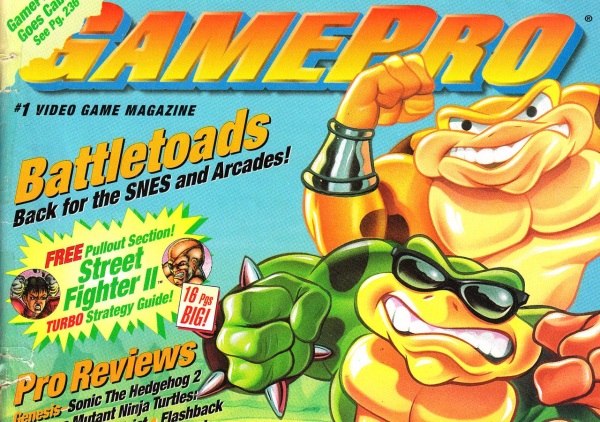
As a Christian, I find that my love for videogames and video game culture are often in conflict with my spiritual life. There are times when I should be praying when instead I am thinking about the latest MMO; times when I should be reading my Bible and instead I am reading the latest video game magazine.

To fight against the tide of addiction, I have found that it is best to take a step back and remove whatever it is that is dragging me down. Balance between my hobby and life is not what I seek, but order in the my life’s priorities.

Find yourself overwhelmed by a hobby? I encourage you to take a step back and find order.

Video Game Addiction: Level 1

Video game addiction is a topic that flares up just about as often as the devastating Southern California wild fires. Which is to say that every year the words “video games” and “addiction” get tossed into the media blender. Unquestioningly accepted as truth, the case for video game addiction is built upon statements such as,  “My son plays My Little Pony’s Adventures in 128 Bit Land x-amount of hours, he must be an addict!” Is it fair though to compare video games to something as addictive as sex, drugs or alcohol? Take a look at the following DSM-IV (Diagnostic and Statistical Manual of Mental Disorders 4th edition) Diagnostic Criteria for Alcohol Dependence entry below:

A maladaptive pattern of alcohol use, leading to clinically significant impairment or distress, as manifested by three or more of the following seven criteria, occurring at any time in the same 12-month period:

1. Tolerance, as defined by either of the following:

a) A need for markedly increased amounts of alcohol to achieve intoxication or desired effect.

b) Markedly diminished effect with continued use of the same amount of alcohol.

2. Withdrawal, as defined by either of the following:

a) The characteristic withdrawal syndrome for alcohol (refer to DSM-IV for further details).

b) Alcohol is taken to relieve or avoid withdrawal symptoms.

3. Alcohol is often taken in larger amounts or over a longer period than was intended.

4. There is a persistent desire or there are unsuccessful efforts to cut down or control alcohol use.

5. A great deal of time is spent in activities necessary to obtain alcohol, use alcohol or recover from its effects.

6. Important social, occupational, or recreational activities are given up or reduced because of alcohol use.

7. Alcohol use is continued despite knowledge of having a persistent or recurrent physical or psychological problem that is likely to have been caused or exacerbated by the alcohol (e.g., continued drinking despite recognition that an ulcer was made worse by alcohol consumption).

Now, I can see how video game “addiction” can be compared to alcohol dependence. There are many similarities:

  • The Time Escalation Component: Where the gamer increases his gaming time as he becomes more engrossed in the game.
  • Withdrawal Symptoms: Especially from games that employ the “carrot on a stick” philosophy (“just have to get to the next level…”).
  • Gaming Culture: Checking out video game web sites through out the day. Reading the latest walkthrough and immersing oneself into the particular game’s community.
  • The Social Sacrifice: Family, friends and loved ones fall to the wayside as the gamer becomes more immersed in the game. This, in my opinion, is when things become a problem. The gamer has lost any sort of balance between the digital and the real. Welcome to the world of escapism.

What do you think?

  • Are video games and alcohol on the same level?
  • Do we overuse the word addiction?
  • Is this a matter of what society deems acceptable?
  • Could you apply what was written above to your favorite hobby?

Leave a comment below and let me know.

Design a site like this with WordPress.com
Get started