A Worthless Journey

Ralph Waldo Emerson once said, “Life is a journey, not a destination.” What happens though when the journey is beautiful but mundane and the destination turns out to be a complete waste of time?

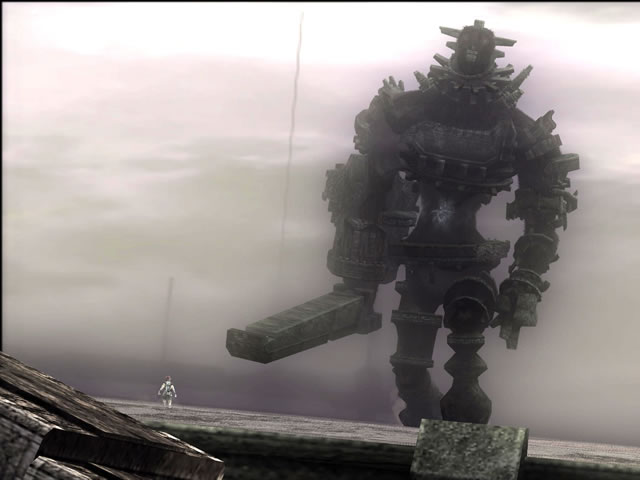
This past weekend I journeyed through the lands of Journey on the PS3. When all was said and done, I had no clue what had just happened or what I had just played. So, I took to Wikipedia to make sense of my experience. The Wikipedia entry only confirmed my suspicions that not much had just happened. To further illustrate this, the following is a quote from the developer’s web site:

Journey is an interactive parable, an anonymous online adventure to experience a person’s life passage and their intersections with other’s.

I can admit that I thought it was cool to travel across the desert, plunge into the dark depths of despair, and finally rise above a wintry landscape onto the mountaintop of hope. What I disliked about the game was it’s stark simplicity. The interactions with other players, while nice, especially in the dark depths, were pointless. Beyond the amazing stylized graphics and tight game play, the narrative journey of Journey fell short to me. If Journey was a movie, I’d be asking for my $15 back.

The Walking Dead: A World Without God

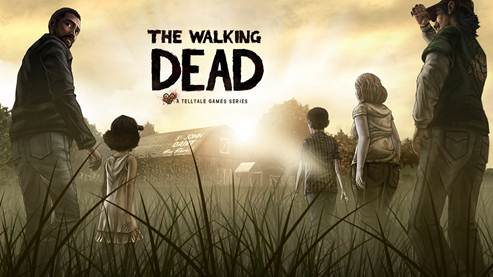
I’ve been trying to figure out why The Walking Dead: Episodes 1 & 2 have gotten under my skin so much. Sure the storyline, characters, and environment are compelling but there has to be more to my fascination with this game. The other day, I finally figured out what has been bugging me, the world of The Walking Dead is a world without God.

The chaos of the virus outbreak has left the world in tatters. Law and order have been completely shoved out the door and the basic instinct of survival has taken over. This survival instinct is solely based on emotion. The problem with emotions is that they are often founded on heat of the moment reactions. Logic is relegated to the corner when emotion is involved. There is no peace in this zombie-filled world of emotional rule.

For God is not a God of disorder but of peace. – 1 Corinthians 14:33a

Sometimes friends “make” you do stupid things.

There came a point in the game where I was presented with a situation where I had the choice about whether to kill someone. Up until this point, the game had made me highly dislike this particular character. To make matters worse, earlier in the game I was conveniently told that anyone who died would quickly become a “walker” (re: zombie). So here I am, dealing with a man who has just collapsed on the ground, seemingly dead. What do I do? My best friend in the game quickly pushes to bash the man’s brains in (which is the only way to kill a zombie). My emotional response that followed was one based on my dislike for the character and the survival response of not wanting to be eaten. I decided to let my friend kill this man. My decision, though based in a game world, has bugged me ever since.

In retrospect, I feel like the game somehow ripped me off; I felt like I had been goaded into an emotional response. It was either going to be him or me. The basic instinct of survival ruled.

Regardless of the game, I am thankful that I live in a real world created by a God who loves order. The Walking Dead is an intense game based on emotional choices. In the end, I know that emotions lie as they vary from day-to-day. I am thankful that God is my compass and not mere emotion.

The Walking Dead: Episodes 1 and 2 Impressions

Last night my wife left me. Well she left me to go to a bachelorette party, I should say. Soon after my son went to bed, I loaded up Telltale Games The Walking Dead: Episode 1 on the PS3. Thinking my wife would be gone for a few hours, I thought that I could at least finish up Episode One – A New Day (I had played for at least an hour a week ago). Little did I know that I would spend the next three hours deeply engrossed in a zombie-filled horror.

I want to say something upfront about this series. Unlike most M-rated games, The Walking Dead earns its rating almost immediately. Beyond the bloody and sometimes lingering gore-filled camera shots, the explicit language used in the game is intense. I don’t think I’ve ever played a video game that uses the f-word with such frequency as The Walking Dead does. This is about as far from the Mario universe as you can possibly get. Just a word of warning.

Living in the chaos of a decimating virus outbreak is not dream of mine. Personal survival quickly becomes the rule of the day; personal survival at the cost of others lives. The Walking Dead: Episode 1 opens with a man named Lee being transported in the back of a police cruiser. Whether he is guilty of whatever it is he has done, the game leaves that up to your imagination. All you know is that something is going horribly wrong in the City of Atlanta. A zombie, standing in the middle of the highway, leads to the police cruiser crashing. The story of Lee’s survival has just begun.

What makes The Walking Dead so compelling is its storyline. The game makes you actually care about different characters. Soon after the car accident, Lee meets up with a little girl named Clementine. This is where the game sucked me in. Lee suddenly has someone that is watching his every move, an innocent. Knowing Clementine is watching me, Lee, makes me make decisions differently. I want to shield her from the carnage. After playing Episode 2 – Starved For Help, I’ve learned that shielding her is often impossible. There is evil in this world, evil that knows no bounds.

I haven’t been this captivated by a game in a long time. The characters, voice acting, and storyline all come together to create a group of people I care about. Deaths come about as shocking. Choices I’ve made I’ve later regretted and have reaped the consequences of. The Walking Dead represents interactive drama at its best. I just wish they’d tone down the language.

Compass

I rolled out of bed this morning and hit the floor. Time to stretch. As I groggily willed my body to move this way and that, I scrolled through my twitter feed. It was then that I noticed that there had been another shooting in Colorado.

Who is your compass?

The details of this mass theater shooting have been slowly trickling in all day. The shooter was an educated man, studying for a P.h.D. in neuroscience. The very image that simple fact conjures is not of someone hellbent on destruction but of someone with intelligence; someone who would know better.

No matter our title or station in life, we are all capable of carrying out terrible acts of violence against our fellow man. To think we are somehow above what suspect James Holmes did is to deny what we are, human.

As a Christian, I know that Christ calls me above the fray, to fight against this inner darkness. Christ is my compass.

I am not sure of what to make of today’s shooting other than to chalk it up to living in an imperfect world. Dr. Mohler wrote a post that discusses the need for answers in a time like this. I highly suggest checking it out.

Design a site like this with WordPress.com
Get started